Cabo Pulmo: The Hidden Treasure, By Anna Urbanik, Los Cabos Magazine Issue #13 – Summer 2007.
For the urban dwellers from around the globe, Cabo Pulmo can offer a safe harbor away from the concrete caves and asphalt mazes of civilization. Those who choose this deserted escape will find more than 7000 hectares of what may well be one of the planet’s last views of Eden. Hidden away from the racket of the tourist-laden celebrity destination of Los Cabos, Cabo Pulmo is often referred to as “The Jewel of the East Cape.”
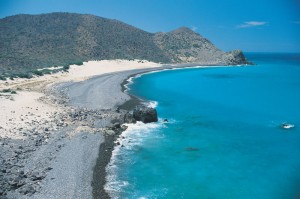 Just an hour north from the Los Cabos International Airport, biologists, adventure seekers and diving aficionados will find a heavenly five-mile-long stretch of virgin desert land, colliding with pristine waters of the Sea of Cortes. Home to one of the only three living coral reefs in North America, the shallow bay of Cabo Pulmo provides a safe shelter for many of the 3000 species of marine creatures inhabiting the Sea of Cortes.
The incredibly rich biodiversity of the area has attracted many divers and beachcombers. However, the area also lured flocks of sport and commercial fishermen who caused a serious decline in fish population during the 1980s. Alarmed, the small local community launched a campaign to protect the area, reaching out to the government and local educational institutions, such as the Autonomous University of Baja California Sur (UABCS).
Dr. Oscar Arizpe, of UABCS, led the studies and was the first scientist to perform systematic research on the marine animals of the area. His conclusions led then-President Ernesto Zedillo to declare the 7,111 hectares in and around Cabo Pulmo, the first national marine park in Mexico on June 15, 1995. The park’s delicate environment, including the coral reef and more than 200 different fish species, went under federal protection and commercial fishing was prohibited within the park’s boundaries.
The Cabo Pulmo reef system has eight fingers and it’s the only hard coral reef in the Sea of Cortes. Shielded from the cold Pacific, two species of coral––elegant and giant––have constructed a substantial reef. The reef begins near shore, just south of Cabo Pulmo, and runs in the northeasterly direction for approximately 70 feet.
In his book, The Log from the Sea of Cortez, John Steinbeck told of his trip to Pulmo in 1940: “The complexity of the life pattern on Pulmo Reef was even greater than at Cabo San Lucas. Clinging to the coral, growing on it, burrowing into it, was a teeming fauna. Every piece of the soft material broken off, skittered and pulsed with life, little crabs and worms and snails. One small piece of coral might conceal 30 or 40 species, and the colors on the reef were electric.”
In addition to the species that depend directly on the reef, the park protects many other creatures that visit it on a temporary basis. According to scientific studies, about 15 percent of the fish species reported in the reef, such as manta rays, yellow jacks, and striped mullets, are visitors. Five, of the seven known species of turtles, periodically visit the shores of Cabo Pulmo to reproduce or to look for food. From July to January, one can find the olive ridley and the leatherback, which come to the park to spawn. From May to June, the black and the hawksbill come looking for food.
When you look up at the sky over Cabo Pulmo you’ll see many of the seabirds common throughout the entire Gulf of California. You could see birds such as the yellow-footed gull, endemic to the Gulf, the royal and elegant terns, or the brown pelican.
In a given day, a visitor here can experience the beauty that is Cabo Pulmo. You may see the bottlenose, spinner or rough-toothed dolphins rise up and splash through the water, or watch a sea lion in a tranquil nighttime swim. During the wintertime, you might hear the unmistakable sound of humpback, fin or Bryde’s whale rise to the surface for air.
Unfortunately, this fragile environment, so full of wonders and living treasures, is now threatened by its own wealth. The coral reef system faces a number of threats, such as coral de-colorization and anchor damage. Poor land use practices and rampant development are leading to increased sedimentation and pollution. In addition, increased beach vehicular traffic is threatening olive ridley and leatherback sea turtle nesting sites. Unregulated fishing and the removal of marine souvenirs also threaten the already diminishing marine biodiversity, especially the growing number of endangered species.
Although conservation efforts are headed in the right direction, the quest to protect Cabo Pulmo falls mostly on the shoulders of the local community. Some of the local organizations actively participating in the conservation process, and providing the opportunity to get involved, are the Patronato Alliance led by Jose Luis “Pepe” Murrieta of Pepe’s Dive Center: www.cabopulmo.com.mx, Amigos para la Conservacion de Cabo Pulmo (Friends for the Conservation of Cabo Pulmo): www.pulmoamigos.org, and Grupo Tortugero (Turtle Group): www.grupotortugero.org. Log on to their websites to learn how you can help maintain Pulmo’s natural beauty.
Cabo Pulmo’s remote setting and small town charm distinguish it from other southern Baja towns. For many, its attraction is found in the wide stretches of sun-drenched beaches, for others it’s the richness of colorful marine species found beneath the waves. Kayaking, snorkeling and diving are only some of the ways to enjoy Cabo Pulmo National Marine Park––camping, hiking and beachcombing are perfect options for those who prefer to stay ashore.
With today’s technology, the many remarkable dives, such as El Cantil and El Bajo, feature exceptional visibility up to 100 feet, especially between June and November. Snorkeling and SCUBA diving tours are available through Cabo Pulmo Dive Center. Prices range from $72 to $163 U.S. per person including transportation between Cabo Pulmo and Los Cabos. For reservations call (624) 141 0726. For tours without transportation, call (624) 141 0884 or check their website: www.cabopulmo.com