Fresh Fish and Seafood, By Anna Urbanik, Los Cabos Magazine Issue #13 – Summer 2007
“Give a man a fish and he’ll eat for a day. Teach a man to fish and he’ll eat for a lifetime,” asserts an old Chinese proverb. Well, not quite. You will also have to teach him how to select the fish, store it and cook it. In Los Cabos, both anglers and non-anglers alike, enjoy the priviliged combination of Baja’s penchant for seafood, Mexico’s rich culinary tradition, and the plentiful marine bounty from the Sea of Cortes.
 Fishing has always been a vital part of survival in Mexico, dating back to the pre-Hispanic cultures of the Mayans and the Aztecs. At that time, Opochtli, the God of Fishing, was worshipped and believed to be the inventor of nets and other fishing equipment.
With time, a nationwide infrastructure for fisheries was established, introducing and federal and local regulations. Fishing became a major component of the national economy. This is seen especially in the coastal states of Mexico, such as Baja California Sur, where marine resources have dominated the state’s economy.
In Los Cabos, fish and shellfish are harvested for local consumption in resorts, hotels and restaurants. These businesses in turn, service domestic and international tourists, who provide the single greatest source of economic input to the state. Over the last 30 years, sport fishing and other ecotourism activities have been the foundation for the growth of tourism in Baja.
As is the case with the rest of the world’s oceans, the area’s marine fish stocks have been subjected to overexploitation. Along the Pacific Coast of Mexico, and within the Sea of Cortes, current stock levels are a fraction of what existed 40 years ago. Nevertheless, the Sea of Cortes remains one of the richest seas in the world. The area is home to at least 40 percent of all known marine phyla around the world, as well as
nearly 5,000 species of shellfish and 900 species of fish.
Mexican cooking traditions take advantage of the abundance and variety of species. You will find a plentiful medley of seafood dishes served around Baja. Some of the most common eating fish species found off the Baja coast are dorado, yellowfin tuna, wahoo, sierra, amberjack, sea bass, snapper and grouper. Other common species, such as marlin, roosterfish and skipjack, are great sport fishing trophies, but not the best choices for dinner.
Chef Juvencio Garcia, a long-time Cabo San Lucas chef specializing in seafood, is currently running the kitchen at the Capitan Fish Restaurant. According to Garcia, different species are appropriate for different dishes. “The snapper is great for a soup, fish fingers or fried; tuna is best for sushi and sashimi, and sea bass is best for fillets.” The most popular catch brought to be cooked at Capitan Fish is dorado, which he recommends to serve a la plancha (grilled) or al ajillo (with oil and garlic).
There is a general rule of thumb for cooking fish. Lean, white flesh fish, such as red snapper and sea bass, is best suited to poaching, sauteing, pan frying and deep frying. Whereas; fatty fish, such as swordfish, is best with dry cooking methods, such as grilling and broiling. The moderately fatty fish, such as the popular sierra mackerel, is amenable to most cooking methods, with the possible exception of deep-frying.
Shellfish is also widely represented on the menus of Los Cabos’ restaurants. These delicious menu items generally fall into two categories: mollusks such as clam, mussel, oyster and scallop, and crustaceans such as shrimp, lobster and crab. Most of them can be prepared al natural (served raw and sprinkled with fresh lemon or lime juice) or in several, more sophisticated ways. Chef Juan Carlos Garcia Rodriguez, an expert on seafood at Mi Casa de Mariscos, suggests a few:
“Shrimp is the most versatile of the locally available shellfish. It can be prepared in a number of different ways: al ajillo, breaded, with coconut, in a soup, a la diabla (with a hot chili sauce), grilled or wrapped with bacon and cheese. Crab is best in soups, fried or baked, while clams make great chowders. Whole lobster is best steamed, and tails can be prepared using literally any cooking method.”
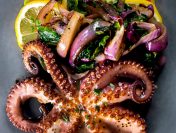
A popular item among the seafood delicacies found in almost any restaurant in Los Cabos is ceviche––a citrus marinated seafood salad with diced onion, chili, avocado and tomatoes. Although, it originated in Peru, ceviche’s popularity spread internationally in the late 20th century, and has since become an important part of the Mexican cuisine. Shrimp, octopus, squid, tuna, and mackerel are popular bases for Mexican ceviche, which is usually served with tostadas (toasted tortillas) or crackers. Many chefs have been experimenting with the basic recipe, adding other ingredients such as celery, drops of soy sauce, or sugar to create more unique versions.
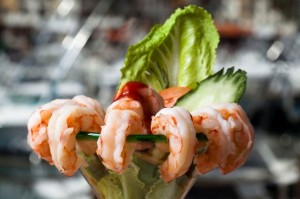
Another favorite is the seafood cocktail. Prepared on a base of spicy tomato sauce (salsa coctelera), pico de gallo and lime juice, it can be complemented with fresh shrimp, scallop, octopus, or almost any other available shellfish.
With a high content of protein, B vitamins, calcium, iron and phosphorus, fresh seafood is an excellent ingredient of a healthy and balanced diet. In addition to its health benefits, it is a delicious base for countless recipes, bound to delight your gastronomic senses.
Most of the recipes are quite simple, and can be prepared at home, however you must be very careful when selecting your product. Fresh fish should not smell fishy. The eyes should be clear, the gills bright red, the skin moist and the flesh firm. Although fish can be stored up to two days, it is strongly recommended to use it within one day. Whole, gutted fish should be stored in flaked ice, with the body cavity filled with ice as well. Fillets should be wrapped tightly in plastic wrap.
Fresh shellfish can usually be stored longer than fish. Clams and oysters can be refrigerated in salty water for up to three days, while shrimp and lobster can be frozen for up to seven days. “Remember, though, that the best seafood you’ll ever have, is the one caught the same day,” suggests Chef Garcia Rodriguez.
If cooking is not your forte, or simply dealing with raw fish doesn’t strike your fancy, don’t worry. In Los Cabos, you’ll find a broad selection of seafood dishes in many different settings: from a simple ceviche at a palapa-covered stand at the beach, to sophisticated modern creations from world-renowned chefs in fine restaurants from San Jose del Cabo to Cabo San Lucas.