Los Cabos artist Antonio Vargas takes us along on his dream day on the water
What a great morning! I am sitting on the Cabo San Lucas Marina and drinking home-brewed coffee as I wait for the capable fishing charter crew to finish with all the final preparations on our boat. Soon, the captain will start the engines and we’ll be off on a fishing adventure. But for now, I’m having a good time watching the early morning marina activity: Skippers and deckhands work on equipment, cleaning and re-cleaning decks, adjusting reels and lines, securing lures, and checking the tuna tubs for live bait; joggers run along the boardwalk, stopping to take in the changing colors of the Cabo San Lucas skyline; an elderly couple strolls quietly; and restaurants come to life with early risers eager to take in the Technicolor sunrise and a hearty breakfast.
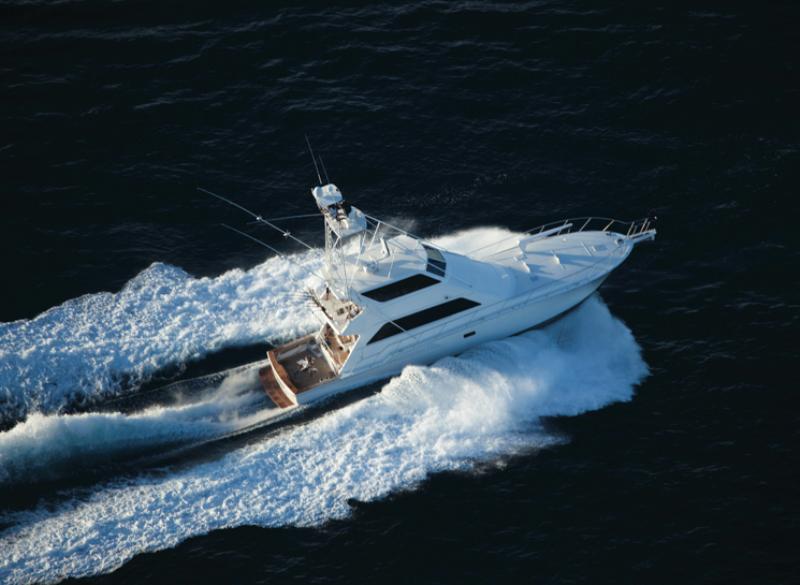
Our captain signals that we are ready to go, and my friends Vicente and Felipe and I jump into the boat called “Rebelde.” It’s a 38-foot Bertram twin-diesel. We’re very excited. We’d been informed that in the days leading up to our trip, the waters had been teeming with fish: dorado, tuna, roosterfish, and wahoo. But, like many of the fishermen who arrive in Los Cabos, we were on the hunt for Big Game.
On the recommendation of the skipper, we head southwest. He was here yesterday and the day before, and both times the anglers onboard had been able to catch and release striped marlin. The boat speeds toward our target area; we’ll spend some time there looking. If we don’t see anything, we’ll proceed farther east, where the water is warm. Yesterday and this morning, we’d looked online for tips on the best spots to find a marlin.
The amiable captain and his deckhand entertain us with stories about Los Cabos fishing. It’s common knowledge that these waters are known as the marlin capital of the world—and for good reason. There are different types of marlin that can be fished here throughout the year; the striped marlin can be found here nearly year-round. Black and blue marlin appear during warmer months, sailfish like the warmest water or when it is just starting to cool down. Other types that are also found during summer and autumn months include wahoo, dorado, and yellow fin tuna. During those transitional months, when the weather begins to heat up, it’s easier to catch snappers and groupers. Our crew reminds us that it’s harder to spot fish during “chubasco” (storm) season, when the water gets a little murkey; the wind doesn’t help, either.
As our outing progresses to the southwest, I begin to worry. It’s a little overcast, and I’m afraid the water won’t be blue. I wonder whether we should go east, where the horizon looks clear, to increase our chances of getting a marlin.
Before we change course, the conversation does. The captain reminisces about the 1970s and `80s, when Cabo sportfishing boomed. Back then, he says, there was an abundance of fish—everywhere you turned.
I suddenly hear one of my lines start to cry. We’d begun trawling just a few minutes ago. The deckhand hurries to see the line. My friend Vicente and I take turns with the fishing pole and, after a short time, he reels in a small tuna. During the next hour, we pull in four more. I fight for a dorado, but he manages to get away.
From there, we head east, to Gordo Banks. We arrive in a patch of blue water. There’s a little wind, the sky is clear, and the conditions are simply beautiful. We’re looking at the water, searching for fins through the surface. The deckhand prepares some live bait: skipjack and baby tuna he’d pulled from a couple of the tuna tubs. The other two lines are running with lures: a “petrolero” (brown with a little bit of yellow and orange) and green-and-yellow “tigrillo.”
 It’s now four and a half hours since we left the marina, and one of the lines cries out. Felipe, Vicente, and I take turns—with a little help from the skilled crew—fighting the fish. After a while, we manage to pull him close enough to get a view. The billfish jumps from the water. A beauty! He measures six or seven feet from tip to tail, a blue marlin.
We fight the marlin for about two hours. Finally, we get him next to the boat. The fast and precise crew gets him on deck, helping us to take photos and notes. We then carefully unhook the marlin and release him back into the ocean.
We thank the crew, sharing our bounty with them and friends back on the marina. And, of course, we have a delicious dinner … almost as delicious as the epic day on the water.
There are several restaurants that will cook your catch just about any way you want it. Chief among the Cabo San Lucas Marina options are Baja Cantina (www.bajacantina.com.mx), Solomon’s Landing (www.solomonslandingcabo.com), and Captain Tony’s (www.piscesgroupcabo.com). Prices average about $7 U.S., a small price to pay when it comes to having your catch prepared in a manner worth the effort you put into reeling it in.