 We scouted the region for Los Cabos’ best beaches. Check out our top 10
By Beto Haro Romero
The decision making process was tough. The Baja Peninsula has more beaches than anywhere else in México; its shores line the Pacific Ocean and Sea of Cortés. Whatever your preference, you will be able to find a beach that fits your needs: whether you are looking for complete solitude or a party vibe, wild water activities or the right spot to pop a tent. We spent hours weighing the virtues and shortcomings of every stretch of sand in the greater Los Cabos area, from Cerritos Beach on the Pacific Ocean to Lover’s Beach on the southernmost tip of the peninsula, all the way up to Cabo Pulmo on the East Cape.
The 10 beaches we have selected represent the very best of Los Cabos. Some are iconic. Some are little known to anyone but locals. All of them are spectacular in their own right.
A House Divided
Lover’s Beach (Playa del Amor) and Divorce Beach (Playa del Divorcio)
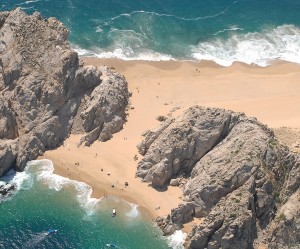
The iconic arch at Land’s End beckons travelers from across the planet to Los Cabos. And the two beaches that surround it are just as comely. Tour guides aboard glass-bottom boats like to joke about the sister beaches: It is, after all, but a short walk from Lover’s to Divorce. But the natural beauty that defines each is no laughing matter. Lover’s Beach, on the eastern side of Land’s End, is a wonderland. Swim, snorkel, kayak, or dive the day away. The calm Sea of Cortés waters allow for easy navigating for even the most inexperienced of snorkelers, and the underwater viewing is sensational. Playful sea lions dart about while dozens of different types of colorful fish pose for pictures. Back on terra firma, enjoy a romantic picnic with your special someone or relax on your towel for some first-rate sunbathing. During the three-minute walk from Lover’s Beach to Divorce Beach, you exchange views of the Sea of Cortés, Médano Beach, and Cabo San Lucas in the distance for the lapping waves of the Pacific Ocean and a horizon that stretches on and on. Though connected, Lover’s Beach and Divorce Beach have hugely different personalities. The unpredictable Pacific Ocean waves make swimming at Divorce Beach an absolute no-no. Instead, take time to explore the rock formations, get in some quality sunbathing, and catch up on that book you’ve been meaning to read. During the late spring, you may still be able to glimpse some lingering humpbacks and the occasional gray whale. Getting There: Lover’s Beach is accessible only by water. Hop aboard a panga (water taxi) or glass-bottom boat, which you can find along Médano Beach and the Cabo San Lucas Marina; or rent a kayak or paddleboard (www.cabosup.com) from Médano Beach. You can also schedule an outing with companies like Cabo Adventures (www.cabo-adventures.com) and Cabo Expeditions (www.caboexpeditions.com.mx), who offer various Lover’s Beach–bound adventures. You can then walk on over to Divorce Beach. Native intelligence: Once every few years, conditions on Lover’s Beach allow for travelers to walk beneath the arch.
The Student Center
Médano Beach (Playa el Médano)
» The most swimmable beach in Cabo San Lucas is also its most popular. Bars and restaurants line the perimeter while kids and bikini-clad coeds splash about in the calm waters. No other beach offers nearly as many restaurants, beach clubs, activities, or spring break action. Those who prefer quiet and pretty views can come in the early morning for a stroll or horseback ride, then hang around for a delicious breakfast at Baja Cantina Beach (www.bajacantinabeach club.com). As the sun warms the water, Médano comes to life. Stand-up paddle enthusiasts work their way across the Cabo San Lucas Bay as others kayak, maneuver wave runners, and try to stay upright on banana boats. The action heats up, too, at spots like Mango Deck (www.mangodeck cabo.com), where the killer menu is outshone only by the party atmosphere. Getting there: Médano is located just off the main highway at Paseo del Pescador or Paseo de la Marina in Cabo San Lucas. Native intelligence: The hottest new activity on Médano Beach is Cabo FlyBoard (www.caboflyboard.com), which allows you to soar above the water on a board that’s propelled by water.
Family Matters
Chileno Bay (Bahía Chileno)
After the raucous crowds on Médano Beach, it’s soothing to come to this tranquil bay. The public beach features several shade palapas, restrooms, showers, as well as a parking lot and boardwalk to accommodate disabled beachgoers. Regularly ranked as one of the cleanest beaches in all of México, Chileno also has kid-friendly tide pools and excellent snorkeling conditions. Getting there: Exit the Tourist Corridor at km 14 and follow the signs toward Chileno. Native intelligence: Several adventure outfits, including Cabo Adventures and Cabo Expeditions, offer snorkel packages to Chileno. You can also bring your own gear—and food and beverages—to enjoy a day of leisurely snorkeling.
Turtle Bay
Santa María Bay (Bahía Santa Maria)
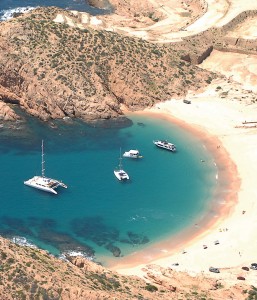
The secluded, horseshoe-shaped beach is a favorite of locals. It is home to colorful fish, sea turtles, and all kinds of sea life, and its rugged cliffs are just begging to be explored. The shoreline generally fills by midday, but early risers are rewarded for their efforts and can have the beach entirely to themselves. Treat yourself by chartering a panga or come along with one of the outfits that offer snorkeling tours including EcoCat (www.caboecotours.com). Getting there: Exit the Tourist Corridor near km 12. Native intelligence: Late July through early November, baby turtles are hatched and released into the sea at Santa María. Come in the early morning for your chance to participate in the breathtaking activity.
Surfers Retreat
Cerritos Beach (Playa Los Cerritos)
» Surfers of all levels flock to this black-and-tan beach for its waves—they range from mild to gnarly—and its full array of amenities. After you hit the water, you can relax with a massage or refuel with a seafood-rich meal. Surfers aren’t the only ones who prefer this Pacific Ocean beach, roughly 40 minutes north of Cabo San Lucas. Families with small children enjoy the calm waters, while others rent kayaks and snorkeling gear or explore atop a horse or ATV. Getting there: Drive north from Cabo San Lucas on Highway 19, then look for a turn-off road to the left at km 65. Native intelligence: Cerritos has seemingly everything, save a place for you to pick up sunblock. So remember to bring your own supply.
Malibu Country
Blue Coast Beach (Playa Costa Azul)
» For some hot surfing action closer to town, consider Blue Coast Beach, more commonly known as Costa Azul. The world-famous surfing beach is conveniently located just outside San José del Cabo. There’s an overabundance of amenities: Relax under a rented shade umbrellas, pick up any must-haves at the convenient store, and stay nourished at the beachside restaurant. Surfers of all levels can enjoy the break, and beginners can take advantage of the surf camp. Getting there: Exit the highway at km 28.5, right at the bridge, and proceed to the beach. Native intelligence: Stop at the highway-level lookout point (mirador) for a delicious iced coconut. It’s refreshing, good for you, and downright yummy.
Get Lost
El Zalate
Few maps or travel guides list El Zalate, but this beach is worth discovering. If you are tired of excessive crowds, this is the perfect place to escape to. The drive there requires patience and a certain amount of bravery—these are dirt roads, people—but will reward you with lovely vistas unlike anything you’ll see by sticking in town. Getting there: When leaving San José del Cabo and heading toward Puerto Los Cabos, follow the signs for the “old road” toward the East Cape. Enjoy views of untrammeled Baja as you continue driving roughly half an hour. There is an arroyo and a large, wild fig. There you’ll want to turn right and head toward the beach, less than two minutes away. Native intelligence: Pack a cooler and a tent; most nights you’ll have the beach and gorgeous night’s sky all to yourself.
Nature’s Best
Cabo Pulmo
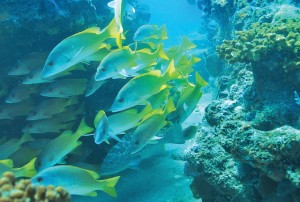
Journey to the East Cape and this national marine park to explore the only living coral reef in North America, a mecca for snorkeling and diving enthusiasts. There are several beaches that dot the East Cape—a 100-mile stretch of coastline starting just north of San José del Cabo—but we are partial to the park itself, which is home to incredible marine life. Getting there: Travel north on Highway 1 past Caduaño, Mira Flores, and Santiago. In Las Cuevas, turn right toward La Ribera. Follow the road to La Ribera and turn right just prior to entering La Ribera. You will see the Cabo Pulmo turnoff. Follow the Cabo Pulmo road south until the pavement ends. Continue six miles on the dirt road. Continue till you see signs with info on Cabo Pulmo. The destination will be the next bay. Native intelligence: Gas up before you head out and take a cooler full of food and drinks. It’s easy to get lost, and you want to be prepared. Once there, don’t pass up the opportunity to dive or snorkel in one of North America’s premier locations.
Sunset Beach
Migriño Beach (Playa el Migriño)
Trade in the wild of Cabo San Lucas nights for the wild of the Pacific Ocean as waves dramatically crash against the shores of this secluded beach, roughly 30 minutes north of Cabo proper. Expect to be left largely alone, save for the occasional ATV and horseback riding tours. During winter and early spring keep your eyes peeled for whale sightings along the horizon. Getting there: Head north from Cabo San Lucas toward Todos Santos on Highway 19. Exit km 97. Native intelligence: Pack a blanket and bottle of wine, then plan to settle in and watch a beautiful sunset over the Pacific Ocean.
The Green Lagoon
Estuary Beach (El Estero)
Estuary Beach is unlike any other shoreline you’ll find in Los Cabos. It begins at the end of Hotel Beach (Playa Hotelera) in San José del Cabo and borders the estuary, which is home to a marshy lagoon. More than 350 species of wildlife and vegetation live here, and you can explore by foot, horseback, mountain bike, kayak, or ATV. Getting there: Estuary Beach is located between the all-inclusive InterContinental Presidente Los Cabos Resort and La Playita in San José del Cabo. Native intelligence: Bring your binoculars to enjoy some of the best bird-watching in all of Los Cabos.
The Story of Cabo San Lucas’s Least Publicized Beach
Los Cabos is home to many beautiful beaches, but there is one that never seems to be mentioned despite the fact that its location borders the entrance to the Cabo San Lucas Marina. There are several names used, but I most commonly hear Playa Coral Negro or Cannery Beach. The beach skirts in front of the old cannery—once the most productive in all of Latin America. On weekends, particularly Sundays—locals’ day off—the beach fills. Tourists taking Land’s End tours on Sundays may be mildly surprised to see older kids scrambling around the rocky outcropping at the far end of Playa Coral Negro en route to Playa del Amor (it’s generally advised you reach Lover’s Beach by water). It’s rather a shame more people don’t visit Playa Coral Negro, since its location is central to the history of Cabo San Lucas. More than 50 years ago, what is now often referred to as a city was little more than a small fishing village. The now-abandoned cannery was once the center of commerce.